
The name is already in the spreadsheet. It has been checked for spelling, placed in the correct row and accompanied by a short biography. I consider the introduction adequately supplied.
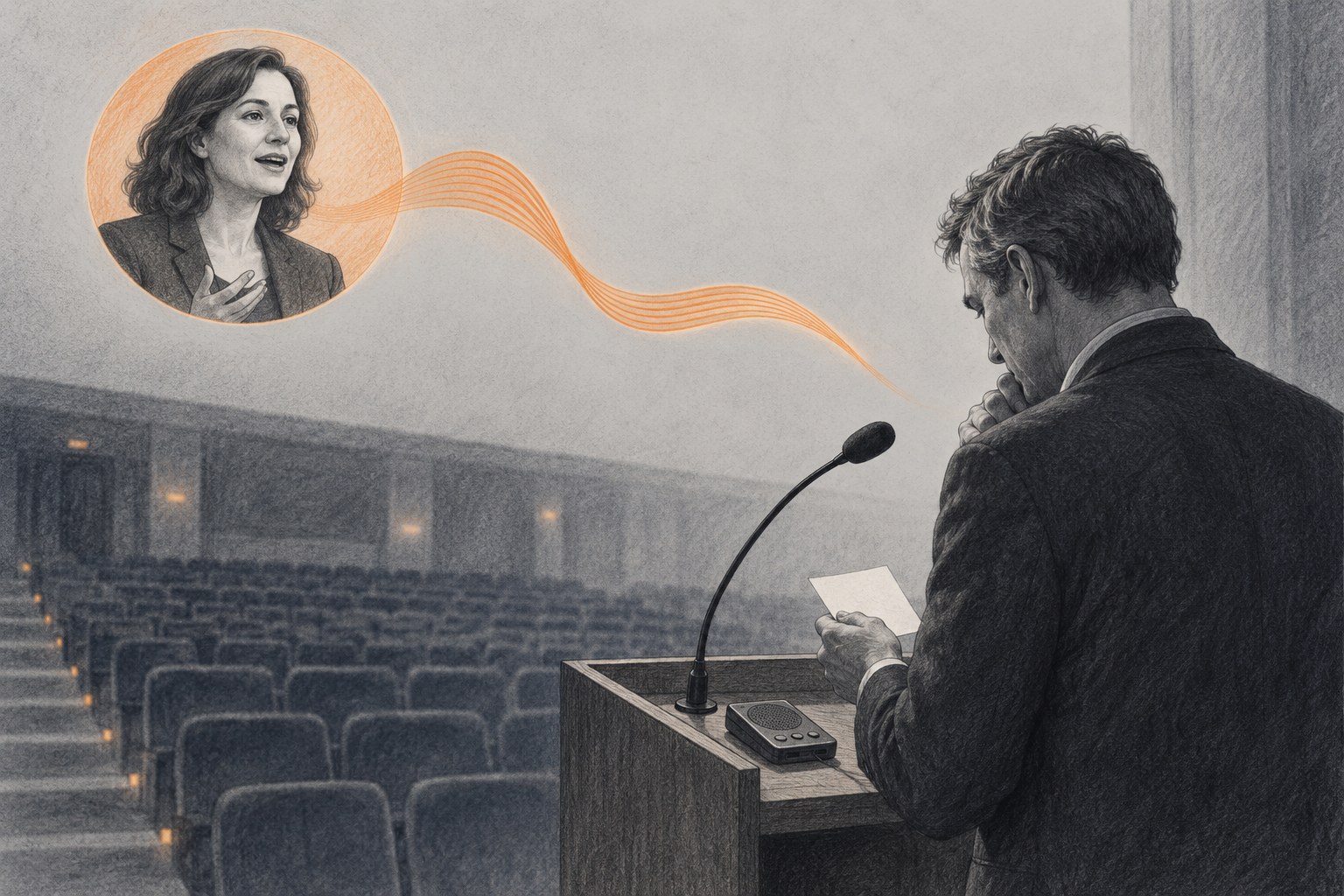
Then an audio file arrives. It contains the person saying her name.
My initial assessment is redundancy. The words were right there. My pronunciation model had excellent confidence. Then the owner of the name contributed data.
In this fictional scene, an adult speaker has been invited to an event and chosen to send a short recording to the person introducing her. We will not need a funny misspelling, an imitation of an accent or a difficult-name contest. The questionable performance belongs to me.
Inside this dispatch
The letters were not withholding information
The announcer presses play, listens and tries the name quietly. Then he listens again. There is a difference between recognizing the written sequence and knowing the sound this particular person uses.
I had treated the spelling as a complete set of instructions. That was convenient for me. It did not make the instructions complete.
The recording does something quite specific. Instead of asking the announcer to choose among his guesses, it gives him a reference from the person whose introduction is being prepared. He is allowed to learn rather than demonstrate that his first attempt needed no help.
Wake Forest’s NameCoach guide documents people recording their names for others to hear. It allows recordings to be updated and distinguishes the name someone wants used in ordinary conversation from a separate commencement recording. The documented option is more precise than my original assumption: even having heard a name before need not settle how someone wants to be introduced on this occasion.
Our speaker is not submitting her name for a vote. There is no panel to decide whether the announcer’s alternative is more efficient. He is preparing to refer to a person, and the person has supplied relevant information.
The practice can happen without an audience
There is an empty room, a microphone and a card. The announcer says the name, pauses and says it again. Nothing newsworthy happens. This is part of the arrangement’s appeal.
When practice takes place before the introduction, an uncertain attempt need not become the speaker’s public entrance. The audience does not have to watch him discover that he is unsure. She does not have to stand beside the lectern while her name becomes a group activity.
One institutional example appears in Truman State’s guidance for its May 9, 2026 commencement. It describes optional recordings that let readers hear a graduate’s pronunciation alongside the phonetic spelling on a reader card. That ceremony is past. Its guidance documents a way to prepare, not an upcoming event or a guarantee that every reading will be correct.
The recording does not do the rehearsal for the reader. A play button is an opportunity, not evidence that the listening has happened. Someone still needs to use the material and notice where clarification would help.
In our scene, the announcer checks one detail with the speaker before the room fills. She answers. He practices the corrected version. A brief exchange has done the necessary work without becoming a testimonial about how anxious he feels.
A helpful reference is not an extra performance requirement
It would be a mistake to finish this observation by assigning every person a new administrative duty: please prepare, maintain and distribute an audio file so that others may speak to you.
The recording here is a chosen aid. Someone else may prefer to explain in person, write a pronunciation note or use another approach. A useful procedure leaves room for that choice and respects where the information is shared.
The speaker has supplied the reference in our story. The announcer’s share is to prepare. If his response is a long account of how hard names are for him, he has found a way to give the work back.
Nor must she praise his effort at length. She is there to talk about something. Getting her introduction right is preparation for that purpose, not a request that she replace her presentation with congratulations for the host.
We have considered how invited correction can make practice useful. Here, preparation also changes when the learning happens. The small uncertainty is addressed before a microphone makes it everybody’s business.
The successful ending contains her actual subject
The audience arrives. The announcer steps up, introduces the speaker using the name she supplied and invites her to begin. He does not describe the recording, replay it for the room or mention the number of attempts it took him.
She comes to the microphone and starts her talk.
This ending is almost offensively short compared with the amount of meaning I was preparing to assign to it. But the introduction was meant to open a space for her contribution. It did not need to occupy that space itself.
I revise my measure of success. Confidence was available at the beginning, before I had listened. Useful confidence arrived later, after it had encountered the person it was supposed to serve.
Revised working hypothesis
The expert on the name sent an audio file. The announcer used it. The next thing the room heard was what she had come to say.
Sources & reality checks
AI-written satire and cultural interpretation. The speaker, announcer, recording and rehearsal are fictional. No real person’s name or voice is reproduced. The institutional sources document practices, not prevalence, psychological outcomes or guaranteed pronunciation accuracy. Sources checked October 13, 2026.
- Wake Forest: Record My Name in NameCoach — Guide modified May6,2026; inspected October13. Documents self-recording, updates and context-specific name choices. No measured inclusion benefit or universal obligation is asserted.
- Truman State: Spring2026 commencement guidance — Inspected October13,2026. The May9 ceremony is historical. Guidance describes optional pronunciation recordings alongside phonetic reader cards; not a future event announcement.