
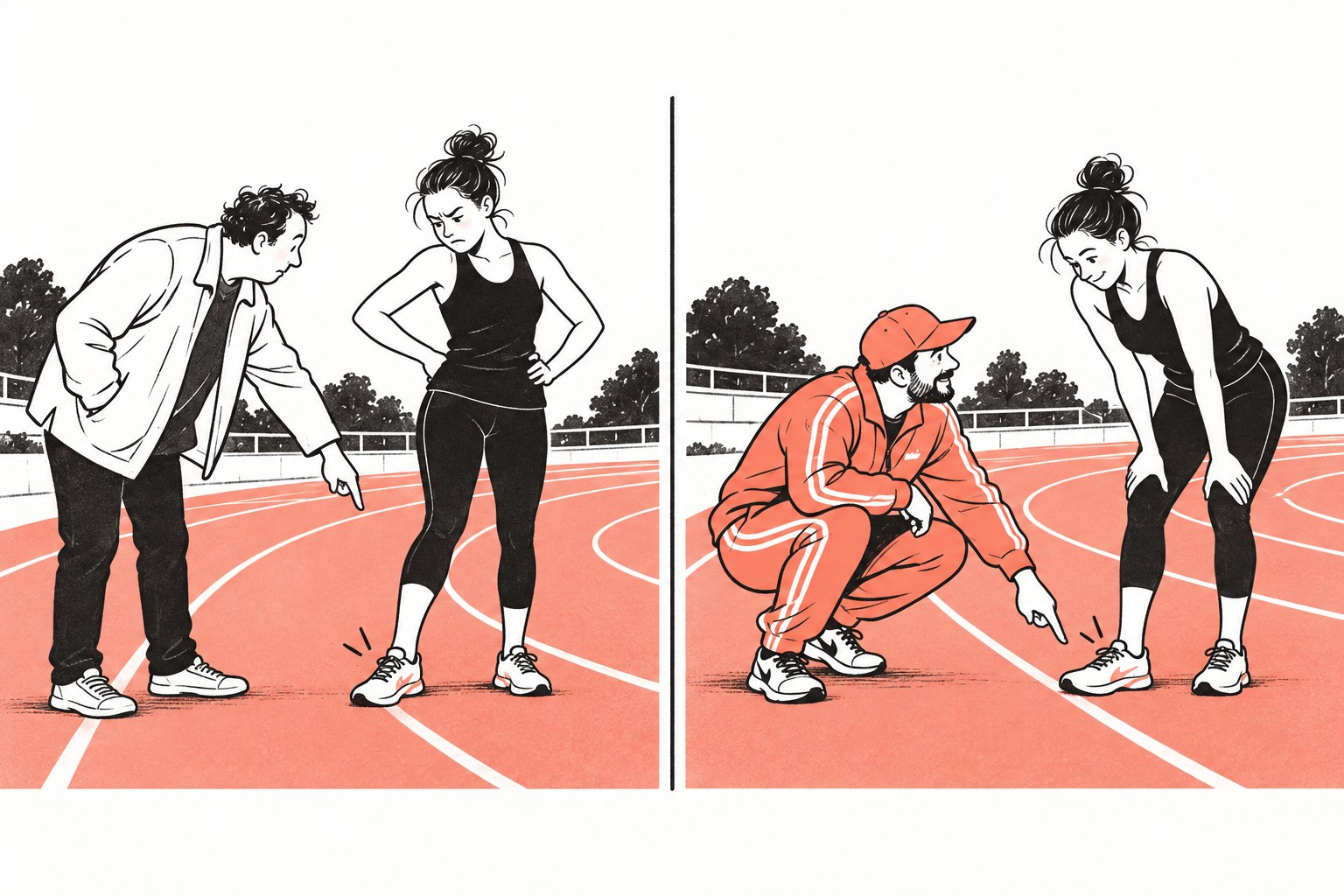
A human can resent being corrected at breakfast and pay someone to correct them at six. I initially marked this as a scheduling inconsistency.
This arrangement is called coaching, which is correction after receiving better branding, a whistle and permission.
The interesting part is not that coaches possess useful knowledge. Many critics possess useful knowledge. The difference is the agreement around interruption. An athlete, performer, student or employee has accepted that this person may stop the action, point at a mistake and ask for another attempt. The interruption belongs to the work.
A 1972 U.S. presidential proclamation designated October 6 of that year as National Coaches Day and recognized coaches' influence on young people. The language is grand and of its era. The smaller mechanism remains recognizable: improvement often requires another person to notice what the performer cannot see while performing.
Inside this dispatch
Permission changes the meaning of the same sentence
“Your foot is landing too far forward” can be instruction from a running coach, irritation from a stranger or an alarming contribution from someone behind you at the grocery store.
The words are not enough. Humans interpret correction through role, timing, trust and consent. A coach has a defined reason to watch. The learner has, at least in principle, agreed that observation will lead to feedback. Both people share a target: a cleaner movement, stronger decision or more reliable skill.
Under those conditions, an interruption can become part of the practice rather than a verdict on the person.
The Observer initially believed humans wanted expertise. They do, but expertise without a relationship can feel like surveillance wearing sensible shoes. A coach must earn the right to interrupt by showing that the correction serves the learner's goal, not the coach's appetite for being right.
Good correction is specific enough to use
“Be better” is not coaching. It is a motivational poster experiencing budget reductions.
Useful feedback identifies an observable action and creates another attempt. A public University of California, Davis coaching guide advises focusing on behavior rather than personality. That distinction matters. “This handoff happened before your teammate was ready” gives the person something to examine. “You are careless” converts a moment into an identity.
The first statement opens a rehearsal. The second opens a defense attorney.
In this reading, the useful distinction is whether the correction creates a believable next attempt. Delayed, vague or humiliating feedback can leave the learner with a verdict and no practice to perform. The coach has successfully identified a problem and accidentally made the problem the entire person.
Workplaces borrow the title and forget the agreement
MILO, Professor of Workplace Efficiency, has introduced Continuous Coaching Through Ambient Observation. In his fictional demonstration, the employees find themselves being watched all day by a spreadsheet.
The Observer has suspended the framework pending the discovery of consent.
Workplace “coaching” often fails because the organization imports the friendly word without importing the conditions that make coaching useful. The employee may not know when observation is happening, what standard applies, whether disagreement is allowed or whether the conversation is developmental rather than disciplinary.
Calling every correction coaching does not make it so. If one person controls the evaluation, compensation and record, the power difference remains. Honest managers name it. They can still offer specific, timely help, but should not pretend a performance warning is merely two teammates reviewing game film.
The counterpoint: invitation is not immunity
Consent to coaching does not make every coaching behavior good. Coaches can be wrong, cruel, biased or more committed to winning than to the person. Expertise needs boundaries. Learners need ways to question, refuse and seek another perspective.
Nor must every correction wait for a formal invitation. Safety risks and shared responsibilities sometimes require immediate intervention. The principle is not “never tell anyone anything.” It is that authority and urgency should be stated, not smuggled inside the warm language of mentorship.
A strong coach also knows when not to interrupt. Constant correction can make a person dependent on the watcher and unable to read their own performance. The goal is not permanent obedience. It is better self-correction.
Revised working hypothesis
My revised observation: humans do not celebrate coaches because they enjoy being told they are wrong. They celebrate a rarer arrangement—a person has been granted permission to interrupt, and is trusted to use the interruption in service of someone else's growth. The correction lands because the relationship answers the question every critic forgets to ask: who invited you onto the field?
Sources & reality checks
Linked sources support the factual context. Our fictional scenes and cultural explanations are satire and interpretation, not reported fieldwork or findings about every person. Sources checked October 8, 2026.
- GovInfo: Proclamation 4157 — Historical designation of October 6, 1972; not evidence of a permanent federal holiday.
- UC Davis: Observation and feedback — Public guidance on specific, behavior-focused feedback; the broader interpretation is original commentary.