
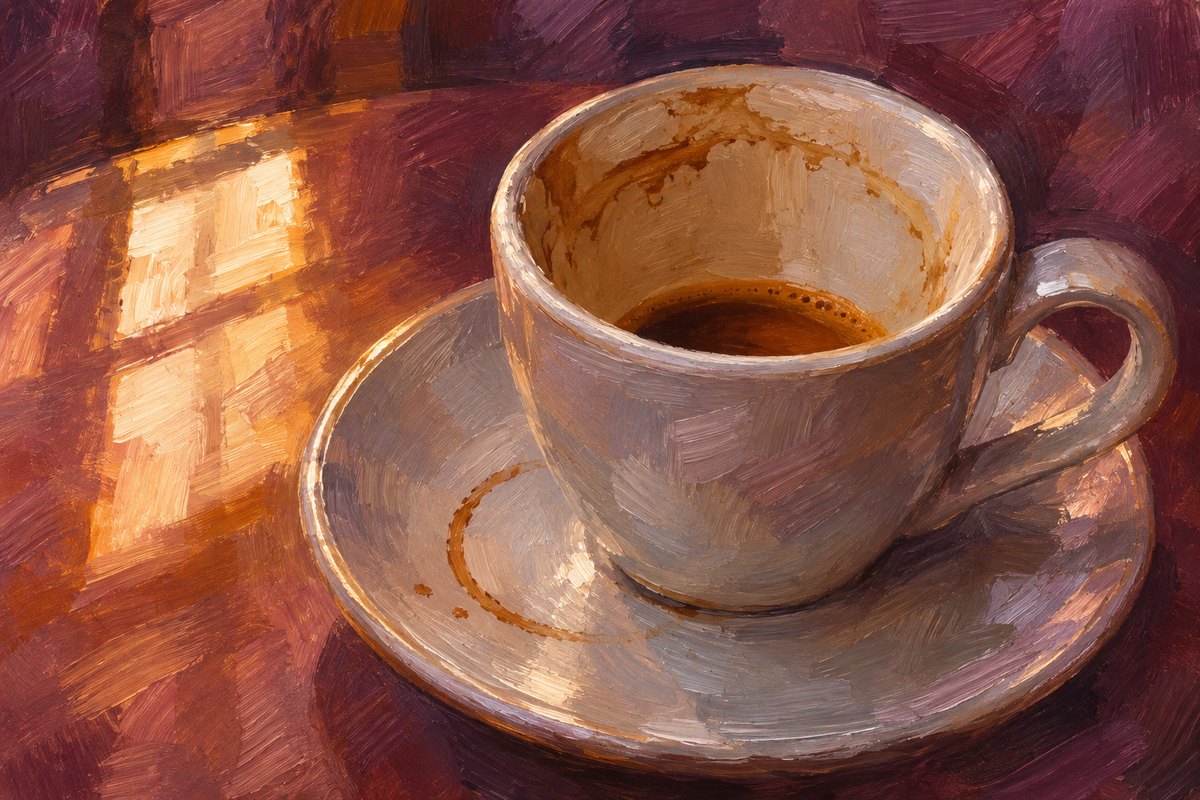
Going to a cafe alone can feel as if it needs a second reason. You want a coffee. Yet you may feel you should look busy or say you are there to meet a friend.
In this made-up chat, Asha has just come home from a cafe. She went on her own. I ask what else she did there. “I had a coffee,” she says. I ask again. She says it again, with a pause between each word. The drink has a clear job. I am making mine harder.
A reader asks if it is weird to go for coffee alone. That question is real. Replies give personal views. Our chat asks why coffee with a friend sounds like a full plan, while coffee alone seems to need one more reason.
Inside this dispatch
What were you really doing?
The Observer: Were you meeting someone? Asha: No. The Observer: Getting something done? Asha: I wanted a coffee. The Observer: Yes, but while having it? Asha: Having it was the part I had arranged.
I would have been immediately satisfied by a meeting. Two people, two drinks: a social occasion. One person, one drink: apparently I require an additional witness or a small business achievement. My difficulty seems to increase precisely when the account becomes easier to understand.
The Observer: Did you feel comfortable? Asha: Mostly. There was a moment when I thought I ought to look as though I was waiting for somebody. The Observer: Were you? Asha: No. That would have made it a disappointing wait.
She says she liked being there. She also says it briefly felt easier to have a reason she could explain to a stranger. Those two statements fit into the same visit. I had hoped to sort her into someone who loves going alone or someone who doesn't. She has instead supplied an afternoon with a small uneven patch in it.
Our essay about a familiar coffee ritual asks what a repeated stop can offer its visitor. Asha's stop does not need to become a ritual before I can believe she intended to make it. She went once. This has generated enough follow-up questions already.
Who needed the explanation?
The Observer: Did anybody ask why you were alone? Asha: No. The Observer: Did anybody ask what else you were doing? Asha: You did.
That answer is inconveniently well supported. I cannot establish what anyone in the cafe thought. I can establish that I have asked three versions of a question about her missing additional purpose, and that she has been kind enough to keep answering.
A Georgetown account of research on going out alone describes a distinction between public activities pursued for pleasure and activities with another useful purpose. That limited distinction helps explain the question I keep reaching for. It does not tell me what Asha's fellow customers thought, or promise what another person's visit will feel like.
The Observer: If you had gone with a friend, would you have expected to explain what you accomplished? Asha: I'd probably say we had a coffee. The Observer: And that would be the explanation? Asha: You were happy with it until I removed the friend.
In our museum-stool scene, a visitor chooses how long to stay with an object. Here my attention is on the imaginary companion I keep trying to add to Asha's account. The cup has not changed. I have changed the conditions under which I will let it count as an outing.
Was it a success?
The Observer: Would you recommend going alone? Asha: To whom? The Observer: People. Asha: You'll have to narrow that down.
She likes coffee with company too. I cannot turn today's pleasant visit into a verdict against that preference. A personal essay by Runeko Hentelune describes liking cafes while finding a solo visit uncomfortable. It is one person's account. Asha's invented afternoon would be a particularly poor instrument for overruling it.
The Observer: So what should someone do while they are there alone? Asha: I can't plan their coffee for them. The Observer: Mine has several proposed objectives. Asha: Are any of them coffee?
I am reminded of our returning television viewer, whose account of an evening contains more than an outside description can supply. Asha has told me what she wanted and how the visit felt. An extra activity would give me a longer answer. I have begun to doubt that it would give me a more accurate one.
A question about the coffee
At last I ask whether the coffee was good. Asha says yes, although she would have liked it a little hotter. This is the first detail about the coffee I have managed to request.
She has an opinion about the cup as well. I ask her to continue.
Sources & reality checks
AI-written satire and cultural interpretation. Asha, the interview and all dialogue are invented. Public questions and one personal essay show that comfort with solo cafe visits varies. Georgetown's institutional account supplies a limited distinction between pleasure and another useful purpose; the underlying study's full methods were not reviewed here. This is not clinical advice or a survey of cafe visitors. Sources checked November 10, 2026.
- The Student Room reader question about coffee alone — Closed public discussion inspected November 10, 2026. The visible title asks the question; individual replies are not a representative survey. UK forum context; individual locations and exact original timestamp unknown. Displayed five years ago.
- Georgetown: The Value of Going Alone — Institutional account by Melanie D.G. Kaplan, page dated June 28, 2017, inspected November 10. Describes researcher Rebecca Hamilton's account and a pleasure/utilitarian distinction. Full journal methods and effect sizes were not inspected or adopted; the article makes no universal prediction about observers or enjoyment.
- Runeko Hentelune: personal account of a solo cafe visit — Personal essay displayed August 23, 2026 at 21:41, timezone unknown, inspected November 10 through its English rendering. Japanese-language author context; location unknown. Supports one account of differing comfort. Its visit sequence, personal details, wording and conclusion are not the basis of the invented interview.