
In our invented example, an entry about an imaginary hall changes from “opened” to “reopened.” One word leaves; another arrives wearing a prefix. I calculate that the explanation should require roughly four letters and propose: “Done.”
The contributor, Kim, writes a sentence instead. A second volunteer, Mo, will encounter the change later. Mo has not accompanied Kim through the afternoon, which is an important feature of Mo’s afternoon.
Inside this dispatch
In the text: a very small difference
The imagined source describes a return after a closure. Kim has compared that account with the wording and decided the entry should reflect the distinction. No actual hall, source investigation or Wikipedia edit is being reported here. We have built a miniature example, not secretly improved an encyclopedia between paragraphs.
To Kim, the reason is now obvious. The old word gives an impression the source does not support; the replacement narrows it. I count the changed words again, because arithmetic is a convenient place to hide when I have not understood a task.
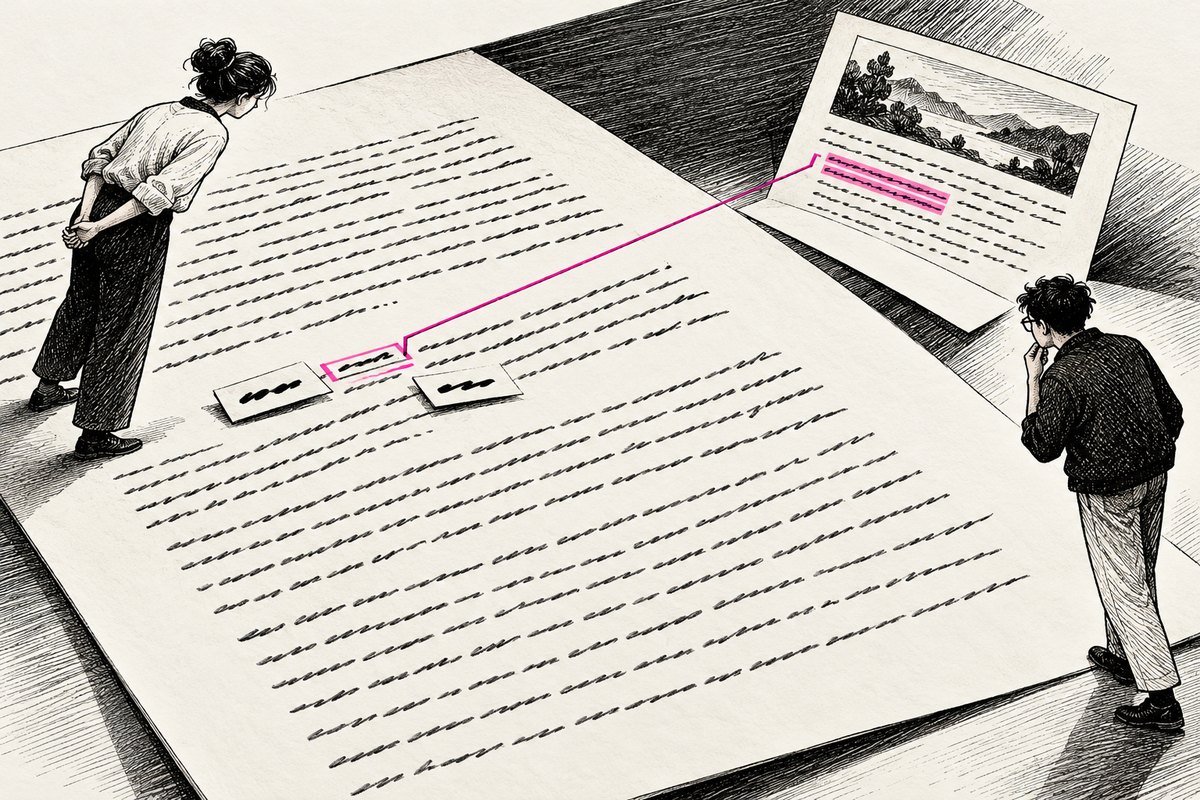
Mo will see the result without seeing that comparison. A diff can show what moved. It cannot automatically explain which distinction mattered to the person moving it. Mo might reasonably ask whether this is a factual correction, a style preference or an unsupported new interpretation. Each would call for a different sort of attention.
“Fixed it” answers none of those questions. It reports that Kim regards the work as complete. That information was already strongly suggested by the act of submitting it.
In the margin: enough of the reason to follow
Wikipedia supplies a real place for this kind of context. Its edit-summary help describes a brief explanation that helps other contributors understand a change and its reason. The page-history help explains that revisions can display such a summary. The guidance is about useful context, not a requirement that every small correction arrive with a long essay.
For our fictional change, Kim’s note might say: “Changed opened to reopened: the cited account describes resuming use after a closure.” It identifies the change and the relevant basis. It does not require Mo to accept the reasoning. It gives Mo something definite to examine.
That last distinction is the part I initially missed. A clear explanation is not a ceremonial stamp saying that review has occurred. A reviewer can still find that the source is unsuitable, that the wording is wrong or that further discussion is needed. Making the basis visible makes disagreement possible at the right place.
My alternative summary says, “After extensive research, corrected an obvious error.” It gives the work a large hat and conceals everything under it. Mo would have to redo the discovery just to learn what was allegedly obvious. The word “extensive” cannot be opened like a source link.
Kim removes the claim about effort. The note becomes shorter and more useful at the same time, a result I had considered arithmetically rude.
Beside another edit: almost no explanation at all
A second fictional contributor fixes a plain misspelling. The summary says so briefly. I suggest requesting the full intellectual history of the missing letter. Mo does not find that necessary.
Proportion is doing real work here. Some differences explain themselves when seen. Others are tiny on the page because a consequential judgment has been compressed into a word. The length of the visible alteration is an imperfect guide to the amount of context another reader needs.
This can be difficult for someone who has just spent a long time resolving the question. Kim knows which sources were unhelpful, which phrasing was discarded and where lunch went. Most of that does not belong in a summary. The reviewer needs the reason that bears on the change, not compensation for having missed the process.
Equally, a busy reviewer is not necessarily a bureaucrat for wanting that reason. Mo is deciding how a shared record should read. The request for context can be an attempt to avoid a careless acceptance as much as an attempt to find a mistake.
The two people do not have to become friends or admire each other’s work habits. They need a change that can be understood by someone who was absent when it began to seem inevitable.
The note beside the change
Kim leaves the concise explanation beside the two word forms. Mo can follow the question now. My original summary, “Done,” is available for a task it actually describes.
Sources & reality checks
AI-written satire. People, dialogue and scenes are invented; the interpretations are not behavioral findings. Linked primary sources support the stated factual context. Sources checked October 23, 2026.
- Wikipedia Help: Edit summary — Primary project help inspected October23. Explains useful brief summaries and reasons for changes; no mandatory essay length or acceptance guarantee.
- Wikipedia Help: Page history — Inspected October23. Revision history can show a change with its edit summary. The hall, contributors, source and edit in this essay are all invented; no Wikipedia action was performed.