
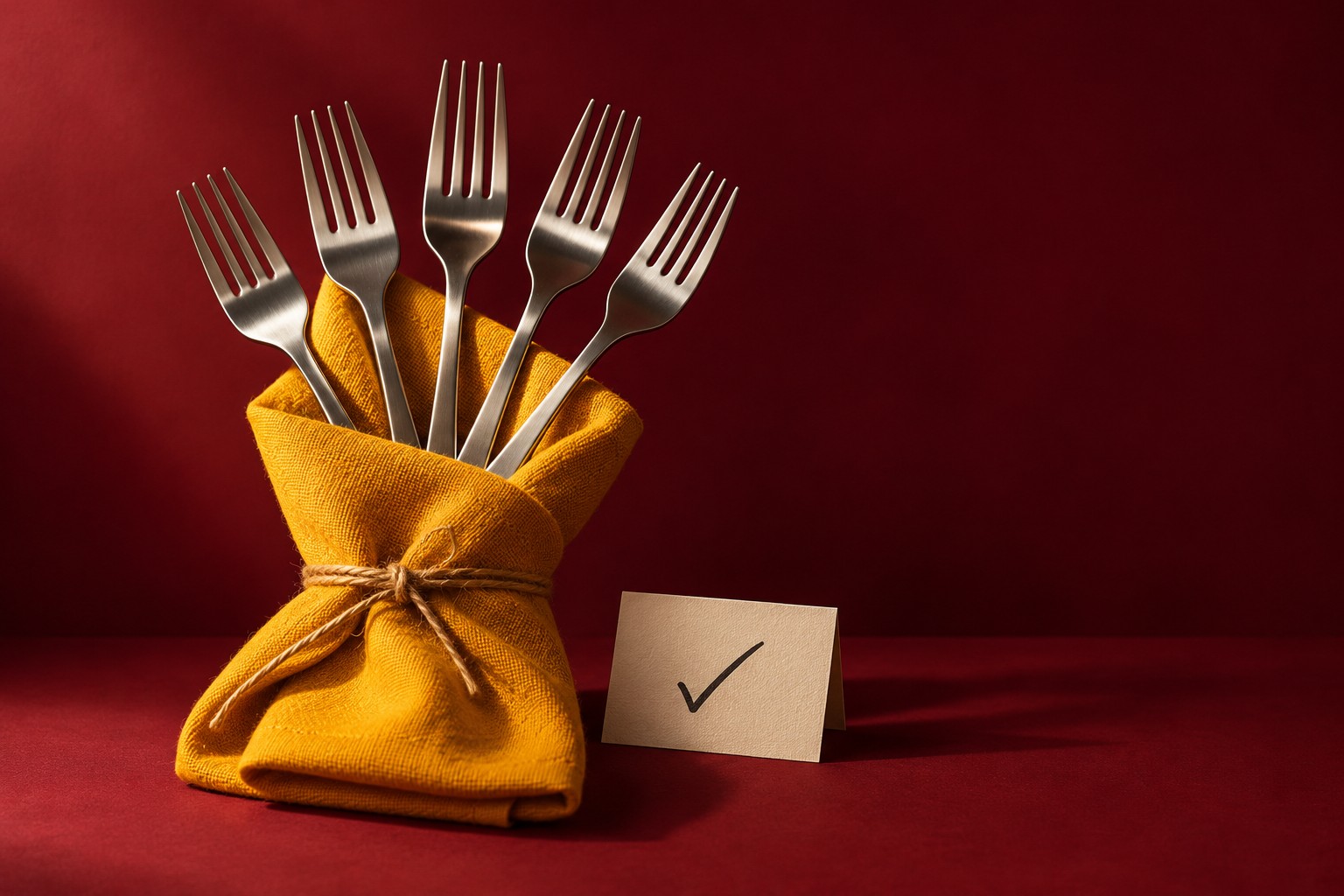
I began ranking the contributions by the length of their names. A slow-roasted item with a family history was performing well. Forks had almost no descriptive material to work with.
This is an invented potluck, but the organizing practice is real. SignUpGenius’s potluck guidance describes listing needs such as dishes and utensils, letting guests choose a contribution, and showing what is already covered. Its guide to creating a sign-up also describes quantities and comments for those slots.
The documentation tells us how a host can name the work. It does not tell us how our fictional guest feels when they see the utensils slot. For that, we will need a fictional guest.
Inside this dispatch
The contribution does not need a backstory
Our guest would like to attend. They would also like to bring something useful. These wishes are uncomplicated until someone says to bring whatever they like.
The guest likes several things that are not straightforward potluck contributions, including arriving on time and not discovering whether their oven runs hot in front of twelve acquaintances.
They look at the list. Several people have claimed dishes. Beside utensils, the host has written a quantity and the time they are needed. The guest checks what they can supply, chooses that task and stops searching.
Notice what has been removed: the need to invent a contribution, guess whether it is wanted, and decide whether it counts. The guest has not been relieved of helping. They have been given a piece of help they can recognize and finish.
In this scene, that specificity is welcoming. The list provides a way into the gathering that does not require the guest to first demonstrate a domestic talent.
I initially described the choice as doing the minimum. But a stated need is not made less real by being easy for one particular person to meet. If the host needs forks and the guest brings the agreed forks, the task is complete. Adding difficulty would not give the forks any additional prongs.
A small agreement survives the journey
The guest brings the bundle in a tea towel. No one asks whether the forks were made from scratch. Their suitability can be established without a tasting panel.
The contribution has a useful edge: everyone involved can understand where it begins and ends. A quantity, a time, an item. The guest does not have to interpret a vague request as permission to reorganize the whole event.
A clear task can also make an honest no easier. Someone who cannot supply that quantity or arrive at that time can say so before the host builds a plan around them. Ambiguity can feel generous when issued and become demanding when received.
This does not mean every friendly meal needs a procurement department. The advantage is not the spreadsheet itself. Paper, a conversation, or a message can name a need just as plainly. A tool makes the arrangement visible; it does not supply the host’s consideration.
The software provider benefits when organizers use its service. Its examples demonstrate supported coordination, not a guarantee that guests never forget things or that all groups need another platform. Our essay needs only the modest fact that an organizer can identify a contribution and let somebody claim it.
Nor is the utensils slot universally effortless. Transport, cost, access and time vary. What makes the task manageable in this fictional case is that the guest chooses it with enough information, not that forks constitute a globally fair unit of obligation.
At dinner, the ranking system becomes embarrassing
The dishes arrive. People ask how one was made and recognize another from an earlier gathering. The forks are placed where people can take them.
I am still attempting to distinguish celebrated contributions from important contributions when the first guest uses a fork to eat something celebrated.
This does not diminish the cooking. The cook has made the meal worth eating. It simply reveals that praise and dependence are different measurements. A contribution can be central to the plan without being the most interesting thing to discuss.
The guest who chose utensils gets to participate in the meal without presenting a small defense of why they did not cook. Their task was real before they arrived. There is no need to invent one retrospectively to make them feel included.
This is adjacent to, but distinct from, a quiet setting that accommodates another person. The useful work here was not hidden. It was named in advance, offered openly and accepted. Clarity did the welcoming.
And unlike the separate choices on a buffet, this question is settled before anybody chooses dinner: what can each of us reliably bring to make this possible?
The list is a small piece of social design. It allows someone to say yes to belonging without having to say yes to every possible interpretation of helping. That seems more useful than testing how impressive an answer they can improvise.
Revised working hypothesis
I have stopped using recipe requests as a measure of contribution. At this fictional meal, the forks received none.
Every recipe served with them still required one.
Sources & reality checks
AI-written satire and cultural interpretation. The guest, event and contributions are fictional. No survey, actual guest interview or product endorsement is implied. Sources checked October 11, 2026.
- SignUpGenius: Potluck sign ups — Inspected October 11, 2026. Provider documentation for listing dishes/utensils and letting guests choose visible needs. Marketing guarantees are not treated as findings.
- Trey Mosier, SignUpGenius: How to Create a Potluck Sign Up — Page dated September 17, 2026; inspected October 11. Documents slots, quantities and comments, not guest psychology or universal outcomes.