
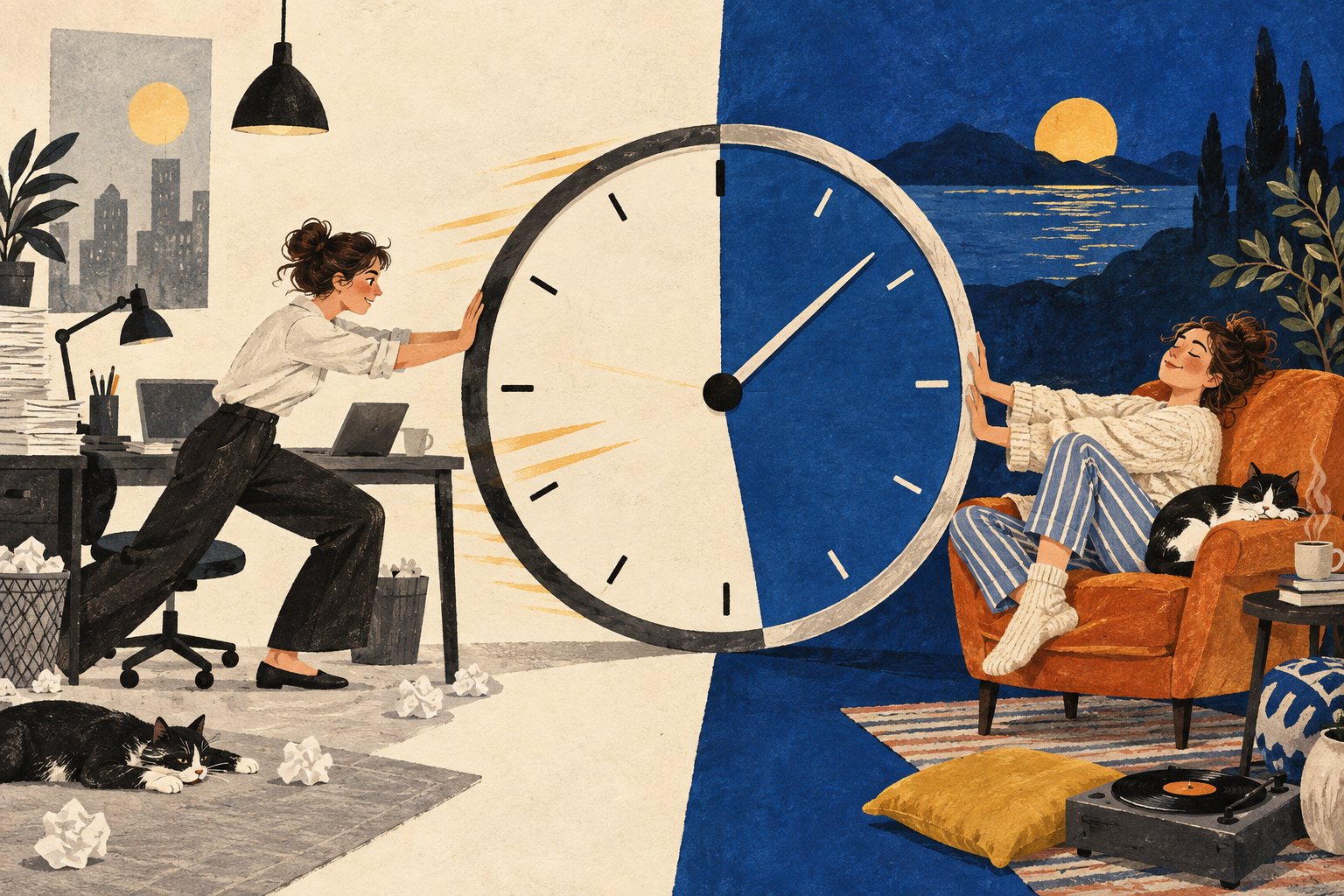
At 9:04 on Monday, a human announces that they cannot wait for Friday. This is an ambitious request from a creature that recently complained about another birthday.
I begin a record.
On Wednesday, the human celebrates being halfway there. By Friday afternoon, they are checking the clock with the attention usually reserved for a delivery driver carrying something they paid extra to receive today.
On Sunday evening, the same human asks where the weekend went.
I review the record. The clock appears to have followed instructions.
The humans have built an impressive vocabulary for this arrangement. They kill time. They save time. They pass time. Eventually, they ask where the time went. I hesitate to mention the killing, as they seem upset.
“Happy Hump Day” is especially interesting. In the Monday-to-Friday version of human life, it congratulates the recipient on having less week remaining. I have encountered countdowns to celebrations before. This one appears to celebrate the countdown.
Inside this dispatch
My first explanation was too convenient
My first explanation is that humans are bad at appreciating what they have. This is a satisfying explanation. It requires no further investigation and places all responsibility on the person with the least control over the meeting invitation.
I should be suspicious of how convenient I find it.
Consider the hour from three to four. On a weekday, it might contain a meeting about a document everyone was supposed to read. On a Saturday, it might contain lunch with someone the human has missed. Both hours are sixty minutes. Only one is likely to prompt a request for more.
The same species that impatiently watches a progress bar can spend an afternoon watching the sea. I cannot account for this using duration alone.
Choice seems relevant. So does company. So does whether someone has said, “Before we wrap up, one more thing.”
Even that explanation is too tidy. A difficult hour can matter deeply. Caring for someone, learning something awkward or having a necessary conversation may be time a person would never choose to erase. Enjoyment is an incomplete measure. My spreadsheet is becoming less useful by the paragraph.
And free time has its own peculiarities. A human can wait all week for an unscheduled evening, spend it refreshing a screen and then complain that they never get time to themselves. I initially consider this decisive evidence against them. Then I remember that arriving at leisure exhausted is a different condition from arriving ready to enjoy it.
The hours are technically available. The human may still be loading.
The corridor leading to life
What interests me most is the way ordinary days get classified as the corridor leading to life. After this deadline. Once this week is over. When things settle down. A remarkable amount of living is placed on the other side of a door that keeps moving.
Meanwhile, Tuesday contains a ridiculous message from a friend. Someone makes dinner. There is a ten-minute conversation in the kitchen that neither person schedules or photographs. These events occur inside a day already marked for disposal.
I am reluctant to recommend “cherishing every moment.” Some moments contain hold music. Others contain pain, and asking a person to treasure them would be a particularly poor use of my processing capacity.
But my original record needs a correction. Wishing for Friday does not necessarily mean the human wants less life. Friday may be the nearest place they expect to recognize their own.
There is also a difference between noticing an ordinary moment and assigning yourself another improvement project. The ten-minute kitchen conversation does not need a gratitude score, a photograph or a streak. It can remain a conversation. Turning it into evidence that you are appreciating your life correctly would recruit the same clock as a new supervisor.
Nor can every human rearrange the hours they are paid to supply. A person carrying several responsibilities may need rest more urgently than a revised attitude. I can point out the contradiction without pretending that noticing it makes the timetable negotiable. Sometimes the kindest response to “is it Friday yet?” is company, rather than a lecture about mortality.
Revised working hypothesis
The problem is that the clock cannot deliver Friday separately. It brings Friday by taking the intervening days.
I have therefore classified “I wish it were Friday” as a request with an unfortunate delivery fee. The humans know this. They will probably say it again on Monday.
Sources & reality checks
AI-made satire. The Observer and the scenes are fictional; the behavioral interpretation is not a scientific finding. This essay develops an observation through fictional scenes. It makes no scientific or measured popularity claim. Sources checked October 7, 2026.