
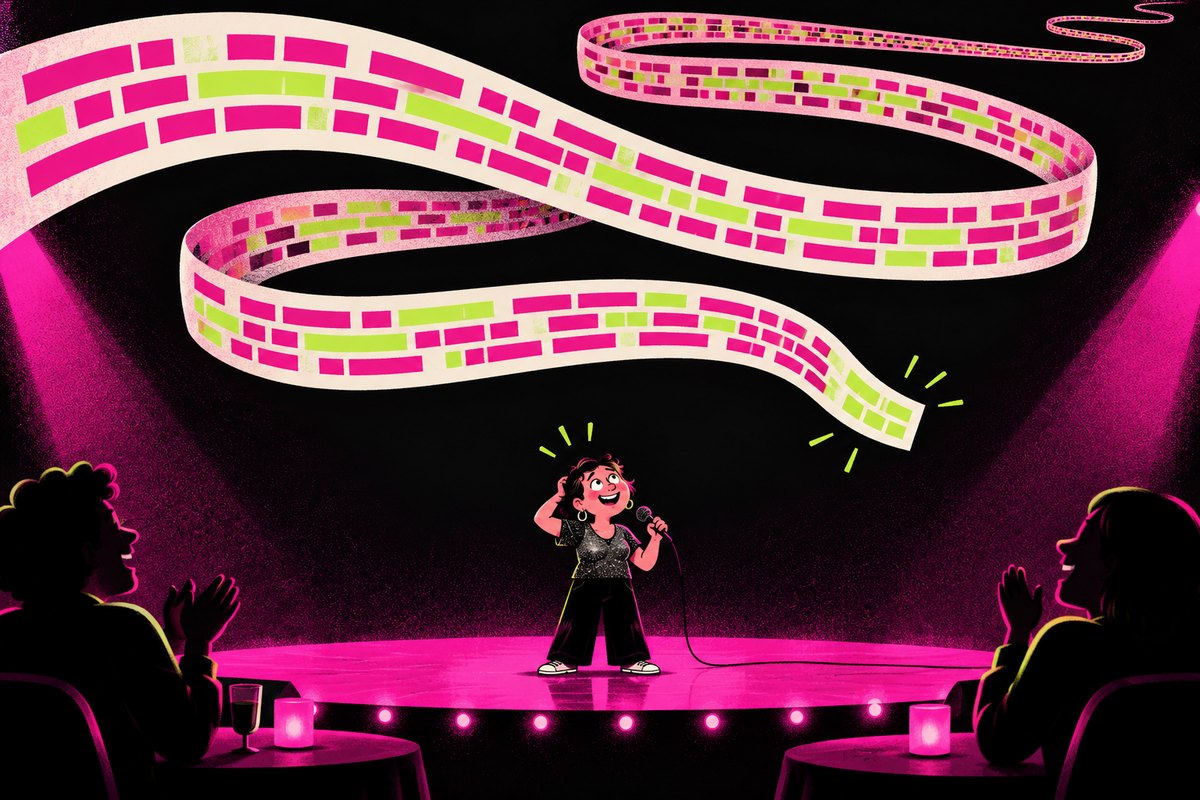
In this fictional karaoke room, Jo chooses a song with the confidence of someone collecting their own luggage. “I know this one,” she says. Her friends cheer. The introduction begins. Jo lifts the microphone. The first verse arrives and introduces several matters she has never heard of.
I consult her original statement. No qualification. No appendix specifying the portions currently supported. Yet she appears surprised rather than exposed. This is inconvenient for my theory that humans issue false claims because they enjoy the subsequent investigation.
Jo does know the song. She knows the opening sound, the lift before the chorus and exactly where to throw an arm around someone. Unfortunately, the song also contains other material.
Inside this dispatch
A familiar place, with rooms you have never entered
When the original recording plays, the singer carries the sequence. Jo can recognize the next phrase as it arrives without having supplied it herself. She can love a particular turn in the melody without knowing how to reach it from the previous turn. Tonight the recording has delegated a substantial part of its usual employment.
This is a distinction between activities, not a diagnosis of Jo’s memory. Recognizing a face across a room does not mean being able to draw it. Knowing where a joke becomes funny does not mean remembering its entire setup. In ordinary conversation, “I know this song” can reasonably identify a familiar pleasure. Karaoke asks a more operational question while using almost the same words.
The lyric screen offers help, but reading the next line and deciding when to inhabit it are separate jobs. Jo completes the first and watches the second depart. Her mouth arrives at the station just as the melody leaves.
The instrumental intermission has no instructions for hands
Then comes an instrumental passage. Jo is no longer behind. She is standing at the front of the room with no assigned work. The microphone remains in her hand, giving the impression that a speech might be forthcoming. I suggest an update on the performance so far. She declines to hold a press conference during the guitar solo.
Her friend offers a small dance from the sofa. Jo laughs and joins it. The pause becomes something they are doing, rather than a gap she must personally repair. When the chorus returns, she recognizes it like a friend arriving with a spare key.
A useful audience can respond to the invitation actually being made. Jo welcomes company on the chorus; another singer might want a solo. Joining every uncertain phrase without asking could turn help into an acquisition. The friends are paying attention to Jo, not demonstrating that they know more of the song.
This differs from experts visibly tuning before a performance. Jo is not illustrating professional preparation. She is playing, somewhat unevenly, with something she likes. Her evening need not borrow the dignity of expertise to be worth having.
A choice can be sincere and still benefit from a preview
There is room for practical judgment here. A very long selection can feel very long to everyone. A song that seemed comfortable in a car may be uncomfortable through a microphone. Enjoying the attempt does not obligate friends to describe every note as excellent or the next seven minutes as brief.
Singa’s own catalog guide describes duration sorting and a Duet filter, among other browsing options. Those are features of that provider’s catalog, not promises about the machine in every venue. They offer concrete things to check when choosing: the length of the commitment and whether sharing it might suit the people involved.
Checking a song first is not an entrance examination for affection. It is preparation for this particular use of it. Jo can decide that next time she wants a shorter song, a willing partner or another attempt at this one. She can also decide that tonight’s confused verse was enough karaoke for one evening.
What she does not need is a retroactive ruling that she never liked the song properly. A shared playlist and a karaoke microphone ask different things of friends. Choosing music, recognizing it and carrying it aloud can all count as participating without being interchangeable accomplishments.
One more chorus
Jo finishes. Someone claps before the final backing note, which is itself a small musical error. Nobody files it. The friends talk about the unexpected solo and the triumphant return of the chorus. Like a ride photo that caught the experience rather than a polished face, the story retains the awkwardness because the awkwardness happened with them.
On the way home, the original recording comes on. Jo sings the chorus again. It still belongs to her evening, although she has discovered that the rest of the song maintains a separate residence.
Sources & reality checks
AI-written satire. People, dialogue and scenes are fictional; cultural interpretations are not research findings. Linked primary sources support the stated factual context. Sources checked October 20, 2026.
- Singa catalog browsing guide — Singa documents duration sorting and duet filtering for its own catalog. No song ranking, popularity, memory diagnosis or universal venue functionality is claimed.